Biochemistry

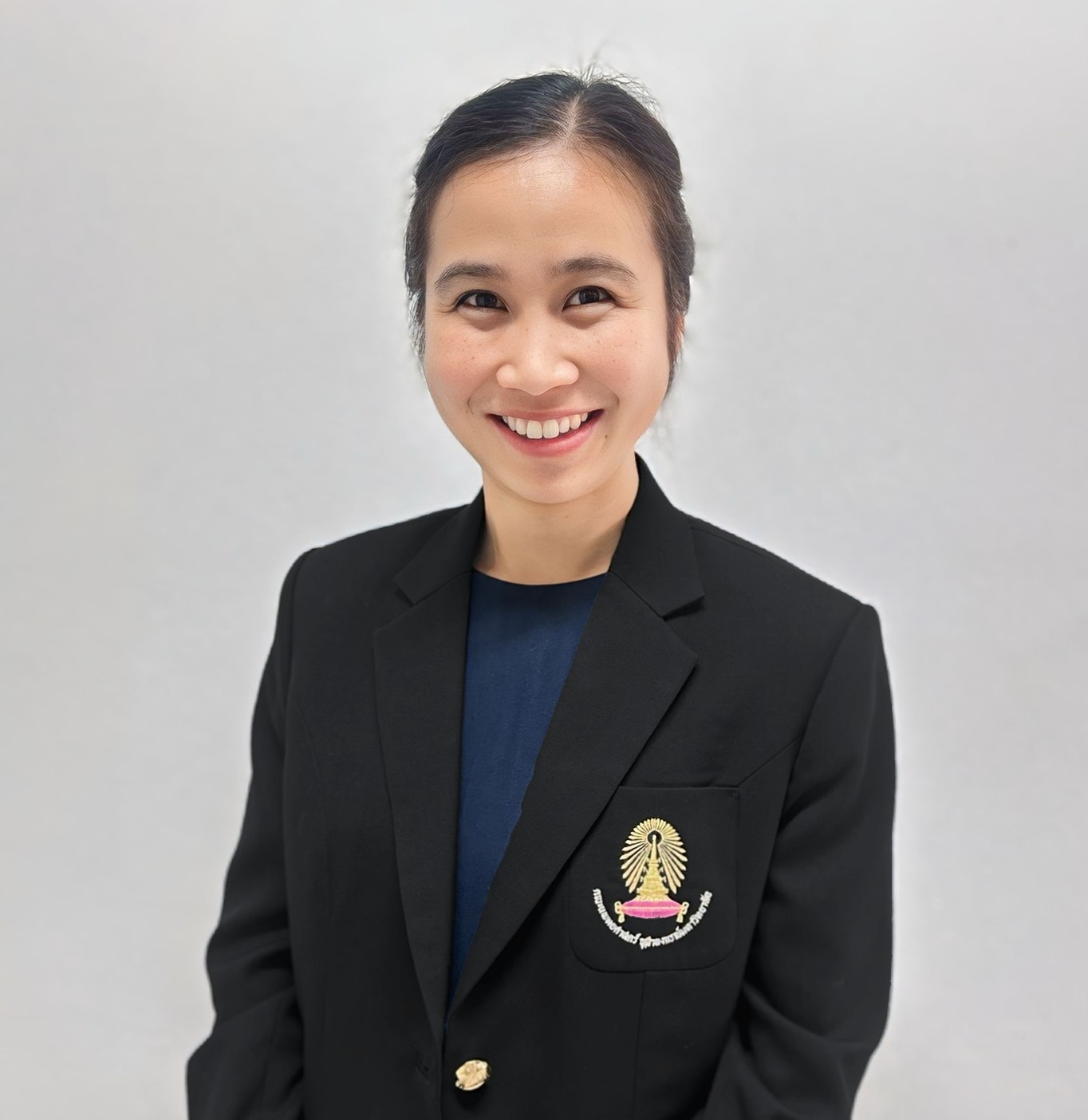
Suphinya  Sathitloetsakun, Ph.D.

Position: Lecturer

Expertise:

  • Molecular Basis of Neurodegenerative Diseases
  • In vivo Disease Modeling
  • CRISPR Gene Editing

Google Scholar


Biography

          Dr. Suphinya Sathitloetsakun is a recipient of the Development and Promotion of Science and Technology Talents Project (DPST) scholarship. She earned her B.Sc. in Biochemistry from Northeastern University and a Ph.D. in Biology from the Massachusetts Institute of Technology (MIT). For her doctoral work, she conducted research under the supervision of Professor Myriam Heiman investigating the role of the sodium channel auxiliary subunit gene Scn4b in Huntington’s disease pathophysiology in mouse models. She subsequently continued as a postdoctoral associate in the Heiman Lab, further investigating the role of Scn4b in other neurodegenerative diseases, including amyotrophic lateral sclerosis (ALS), while contributing to collaborative projects in biosensor imaging and induced pluripotent stem cell (iPSC) reprogramming. In 2026, she joined the Department of Biochemistry, Faculty of Medicine, Chulalongkorn University. Her research interests include understanding the molecular and cellular mechanisms underlying selective neuronal vulnerability in neurodegenerative diseases and applying genetic approaches such as CRISPR-based gene perturbation, adeno-associated virus (AAV)-mediated gene delivery, and in vivo disease modeling to investigate gene function and disease mechanisms.

Education

  • Postdoctoral Associate, The Picower Institute for Learning and Memory, Massachusetts Institute of Technology, USA, 2026
  • Ph.D. in Biology, Massachusetts Institute of Technology, USA, 2025
  • Sc. in Biochemistry (summa cum laude), Northeastern University, USA, 2018
  • Mount Holyoke College, USA, 2014-2016


Awards

  • Royal Thai Scholarship, Development and Promotion of Science and Technology, 2010-2025
  • Best Oral Presentation Award, Thailand Bioinformatics Research Network Conference, 2025
  • KSQ Distinguished Scholar Award, KSQ Therapeutics Inc., 2019
  • International Scholar, Northeastern University, 2016-2018
  • Dean’s List, Northeastern University, 2016-2018
  • Abby Howe Turner Award in Biology, Mount Holyoke College, 2016
  • Bernice MacLean Award in Biology, Mount Holyoke College, 2016
  • Mildred L Sanderson Prize in Mathematics, Mount Holyoke College, 2015

Publications

  1. Linville RM, James BT, Galani K, Ho LL, Shin JH, Oliver E, Fass SB, Cameron JC, Fitzwalter B, Bock R, Murray EM, Louçã M, Oke O, Wang C, Engelberg-Cook E, DeTure M, Farrell V, Pineda S, Sathitloetsakun S, Liang X, Madras B, Dickson DW, Mash DC, Turecki G, Wheeler VC, Alvarez VA, Gabuzda D, Kellis M, Heiman M. Cross-species single cell atlas of the striatum defines cell type and subregion disease vulnerabilities. Cell. 2026;189(20):6490-6521. (link)
  1. Sathitloetsakun S and Heiman M. Unbiased genome-wide approaches to identify vulnerability factors in Huntington’s disease. Huntington’s Disease: Pathogenic Mechanisms and Implications for Therapeutics. 2024;397-410. (link)
  2. Mortensen S, Cole LF, Bernal-Franco D, Sathitloetsakun S, Cram EJ, Lee-Parsons CWT. EASI transformation protocol: an Agrobacterium-mediated transient transformation protocol for Catharanthus roseus seedlings. Methods Mol Biol. 2022;2505:249-262. (link)
  3. Mortensen S, Weaver JD, Sathitloetsakun S, Cole LF, Rizvi NF, Cram EJ, Lee-Parsons CWT. The regulation of ZCT1, a transcriptional repressor of monoterpenoid indole alkaloid biosynthetic genes in Catharanthus roseus. Plant Direct. 2019;3(12):e00193. (link)
  4. Mortensen S, Bernal-Franco D, Cole LF, Sathitloetsakun S, Cram EJ, Lee-Parsons CWT. EASI transformation: an efficient transient expression method for analyzing gene function in Catharanthus roseus seedlings. Front Plant Sci. 2019;10:755. (link)

Books

  • Sathitloetsakun S, Heiman M. Unbiased genome-wide approaches to identify vulnerability factors in Huntington’s disease. Chapter 16. In: Yang XW, Thompson LM, Heiman M, editors. Huntington’s Disease: Pathogenic Mechanisms and Implications for Therapeutics. London: Academic Press; 2024. p. 397-410.
Scroll to Top